Before you begin
PingAM JavaScript
To successfully complete this tutorial refer to the prerequisites in this section.
The tutorial also requires a configured PingAM server.
- Node and NPM
-
This sample requires a minimum Node.js version of
18, and is tested on versions18and20. To get a supported version of Node.js, refer to the Node.js download page.You will also need
npmto build the code and run the samples.
Server configuration
This tutorial requires you to configure your PingAM server as follows:
Task 1. Create a demo user
The samples and tutorials in this documentation often require that you have an identity set up so that you can test authentication.
To create a demo user in PingAM, follow these steps:
-
Log in to the PingAM admin UI as an administrator.
-
Navigate to Identities, and then click Add Identity.
-
Enter the following details:
-
User ID =
demo -
Password =
Ch4ng3it! -
Email Address =
demo.user@example.com
-
-
Click Create.
Task 2. Create an authentication tree
Authentication trees provide fine-grained authentication by allowing multiple paths and decision points throughout the authentication flow. Authentication trees are made up of nodes that define actions taken during authentication.
Each node performs a single task, such as collecting a username or making a simple decision. Nodes can have multiple outcomes rather than just success or failure.
To create a simple tree for use when testing the Orchestration SDKs, follow these steps:
-
Under Realm Overview, click Authentication Trees, then click Create Tree.
-
Enter a tree name, for example
sdkUsernamePasswordJourney, and then click Create.The authentication tree designer appears, showing the Start entry point connected to the Failure exit point.
-
Drag the following nodes from the Components panel on the left side into the designer area:
-
Page Node
-
Username Collector
-
Password Collector
-
Data Store Decision
-
-
Drag and drop the Username Collector and Password Collector nodes onto the Page Node, so that they both appear on the same page when logging in.
-
Connect the nodes as follows:
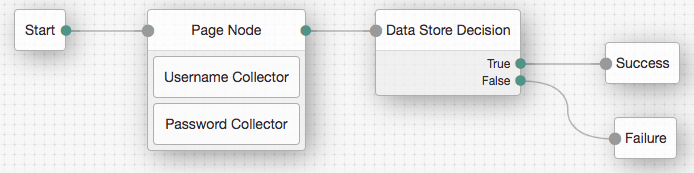 Figure 1. Example username and password authentication tree
 -
Select the Page Node, and in the Properties pane, set the Stage property to
UsernamePassword.You can configure the node properties by selecting a node and altering properties in the right-hand panel. One of the samples uses this specific value to determine the custom UI to display.
-
Click Save.
Task 3. Register a confidential OAuth 2.0 client
Confidential clients are able to store credentials securely and are commonly used for server-to-server communication.
To register a confidential OAuth 2.0 client application for use with the SDKs in AM, follow these steps:
-
Log in to the PingAM admin UI as an administrator.
-
Navigate to Applications > OAuth 2.0 > Clients, and then click Add Client.
-
In Client ID, enter
sdkConfidentialClient. -
In Client Secret, enter a strong password and make a note of it for later use.
For example,
5tr0ngP@S5w0rd!The client secret is not available to view after this step.
If you forget it, you must reset the secret and reconfigure any connected clients.
-
In Default Scopes, enter
am-introspect-all-tokens.PingAM creates the new OAuth 2.0 client and displays the properties for further configuration.
-
On the Advanced tab:
-
Enable the Implied consent property.
-
-
Click Save Changes.
Task 4. Register a public OAuth 2.0 client
Public clients do not use a client secret to obtain tokens because they are unable to keep them hidden. The Orchestration SDKs commonly use this type of client to obtain tokens, as they cannot guarantee safekeeping of the client credentials in a browser or on a mobile device.
To register a public OAuth 2.0 client application for use with the SDKs in AM, follow these steps:
-
Log in to the PingAM admin UI as an administrator.
-
Navigate to Applications > OAuth 2.0 > Clients, and then click Add Client.
-
In Client ID, enter
sdkPublicClient. -
Leave Client secret empty.
-
In Redirection URIs, enter the following values:
https://localhost:8443/callback.htmlAlso add any other domains where you will be hosting SDK applications. -
In Scopes, enter the following values:
openid profile email address -
Click Create.
PingAM creates the new OAuth 2.0 client, and displays the properties for further configuration.
-
On the Core tab:
-
In Client type, select
Public. -
Disable Allow wildcard ports in redirect URIs.
-
Click Save Changes.
-
-
On the Advanced tab:
-
In Grant Types, enter the following values:
Authorization Code Refresh Token -
In Token Endpoint Authentication Method, select
None. -
Enable the Implied consent property.
-
-
Click Save Changes.
Task 5. Configure the OAuth 2.0 provider
The provider specifies the supported OAuth 2.0 configuration options for a realm.
To ensure the PingAM OAuth 2.0 provider service is configured for use with the Orchestration SDKs, follow these steps:
-
Log in to the PingAM admin UI as an administrator.
-
In the left panel, click Services.
-
In the list of services, click OAuth2 Provider.
-
On the Core tab, ensure Issue Refresh Tokens is enabled.
-
On the Consent tab, ensure Allow Clients to Skip Consent is enabled.
-
Click Save Changes.
Task 6. Configure CORS
Cross-origin resource sharing (CORS) lets user agents make cross-domain server requests. In PingAM, you can configure CORS to allow browsers from trusted domains to access PingAM protected resources. For example, you might want a custom web application running on your own domain to get an end-user’s profile information using the PingAM REST API.
The Orchestration SDK for JavaScript samples and tutorials all use https://localhost:8443 as the host domain, which you should add to your CORS configuration.
If you are using a different URL for hosting SDK applications, ensure you add them to the CORS configuration as accepted origin domains.
To enable CORS in PingAM, and create a CORS filter to allow requests from your configured domain names, follow these steps:
-
Log in to the PingAM admin UI as an administrator.
-
Navigate to Configure > Global Services > CORS Service > Configuration, and set the Enable the CORS filter property to
true.If this property is not enabled, CORS headers are not added to responses from PingAM, and CORS is disabled entirely. -
On the Secondary Configurations tab, click Add a Secondary Configuration.
-
In the Name field, enter
OrchSDK. -
in the Accepted Origins field, enter any DNS aliases you use for your SDK apps.
This documentation assumes the following configuration:
Property Values Accepted Originshttps://localhost:8443http://localhost:9443Accepted MethodsGETPOSTAccepted Headers -
Click Create.
PingAM displays the configuration of your new CORS filter.
-
On the CORS filter configuration page:
-
Ensure Enable the CORS filter is enabled.
-
Set the Max Age property to
600 -
Ensure Allow Credentials is enabled.
-
-
Click Save Changes.